

Last Updated: November 19, 2026
Quick Summary
Choose durable patriotic shirts by checking fabric weight of at least 4 oz/yd², stated fiber content, and pre-shrunk treatment. Look for double-needle stitching, side seams, a ribbed collar with neck tape, and a named decoration method like screen printing. If a listing fails two or more of these five checks, move on.
- Fabric under 4 oz/yd² is light, 4 to 5 oz is midweight, and above 5 oz is heavier cotton.
- Ring-spun cotton resists pilling better than standard open-end cotton.
- Screen printing ranks as the best all-around durable decoration method, especially on solid colors.
- Wash shirts inside out in cold water on a gentle cycle and skip fabric softener.
- A Made in USA label alone does not specify durability; confirm weight, fiber, construction, and print method.
Table of Contents
- Start With Fabric Weight and Fiber Content
- The Best Fabric for T-Shirts That Last Through Wash Cycles
- Inspect Stitching, Seams, and Shape Retention Before You Buy
- Judge Print Durability by the Decoration Method
- Are Patriotic T-Shirts Made in USA More Durable?
- How to Wash Graphic T-Shirts So Prints and Color Last
- Use a Five-Point Checklist Before You Check Out
- Shop the It's Real USA Collection With Confidence
- Frequently Asked Questions
Start With Fabric Weight and Fiber Content
Fabric weight is the best predictor of how durable patriotic shirts hold up, and it's printed on almost every product page.
A common rule of thumb is that under 4 oz/yd² is light and breezy, 4 to 5 oz is a middle ground, and above 5 oz is a heavier cotton that resists thinning but takes longer to break in.
Lighter knits use thinner yarn, so they abrade faster at the collar, underarms, and hem. Heavier knits use thicker yarn and more of it, slowing the wear cycle.
Check the label before you fall for a flag graphic. If the spec sheet does not list a weight, treat that as a warning sign.
Why 3.4 oz and 5.3 oz Fabrics Wear Differently
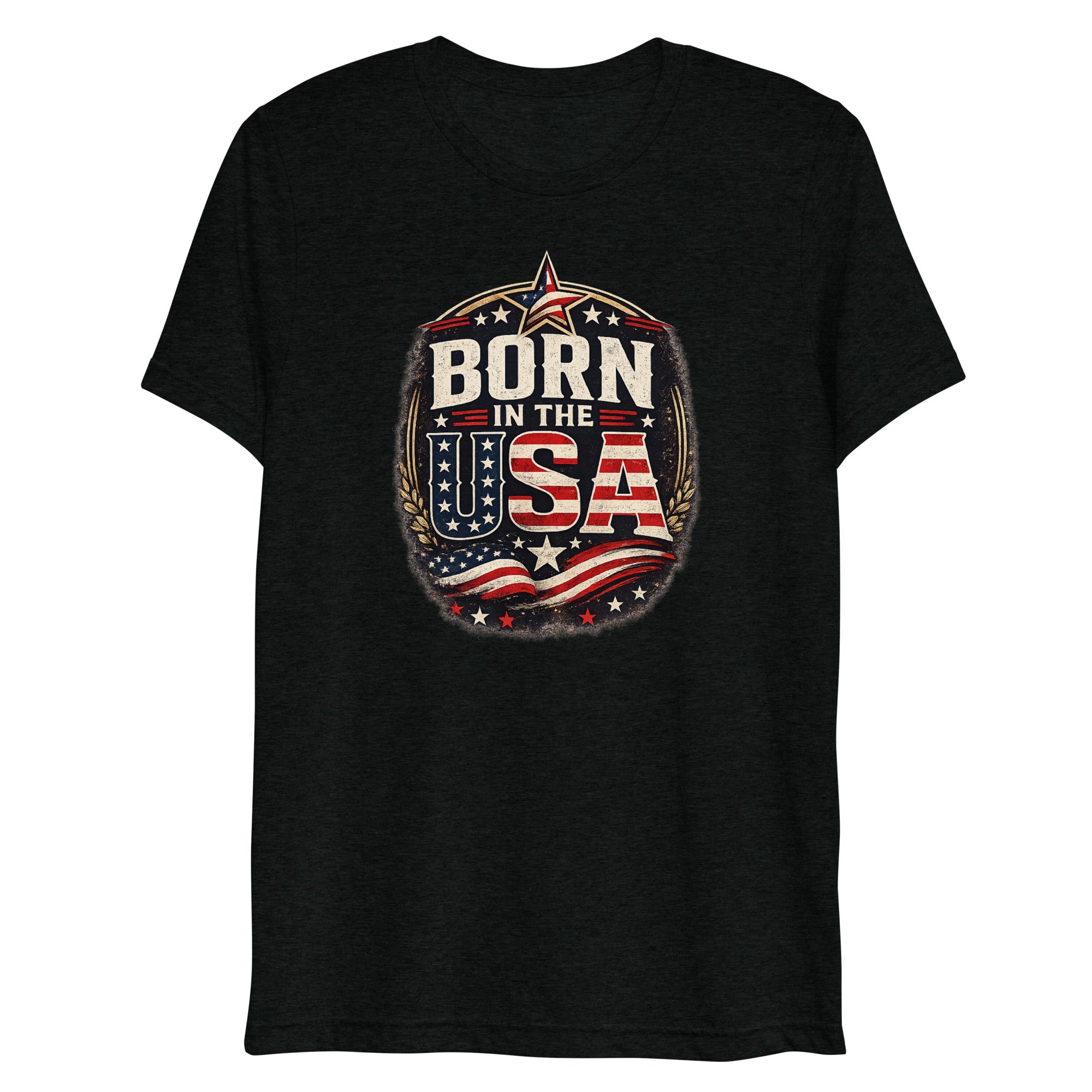
A 3.4 oz tri-blend, like the fabric in our Born In The USA Unisex Tri-Blend T-Shirt, drapes close to the body and feels weightless in July heat. It is pre-shrunk, side-seamed, and has a vintage, fitted look. The trade-off: lighter fabric can be slightly sheer in lighter colors or under certain lighting.
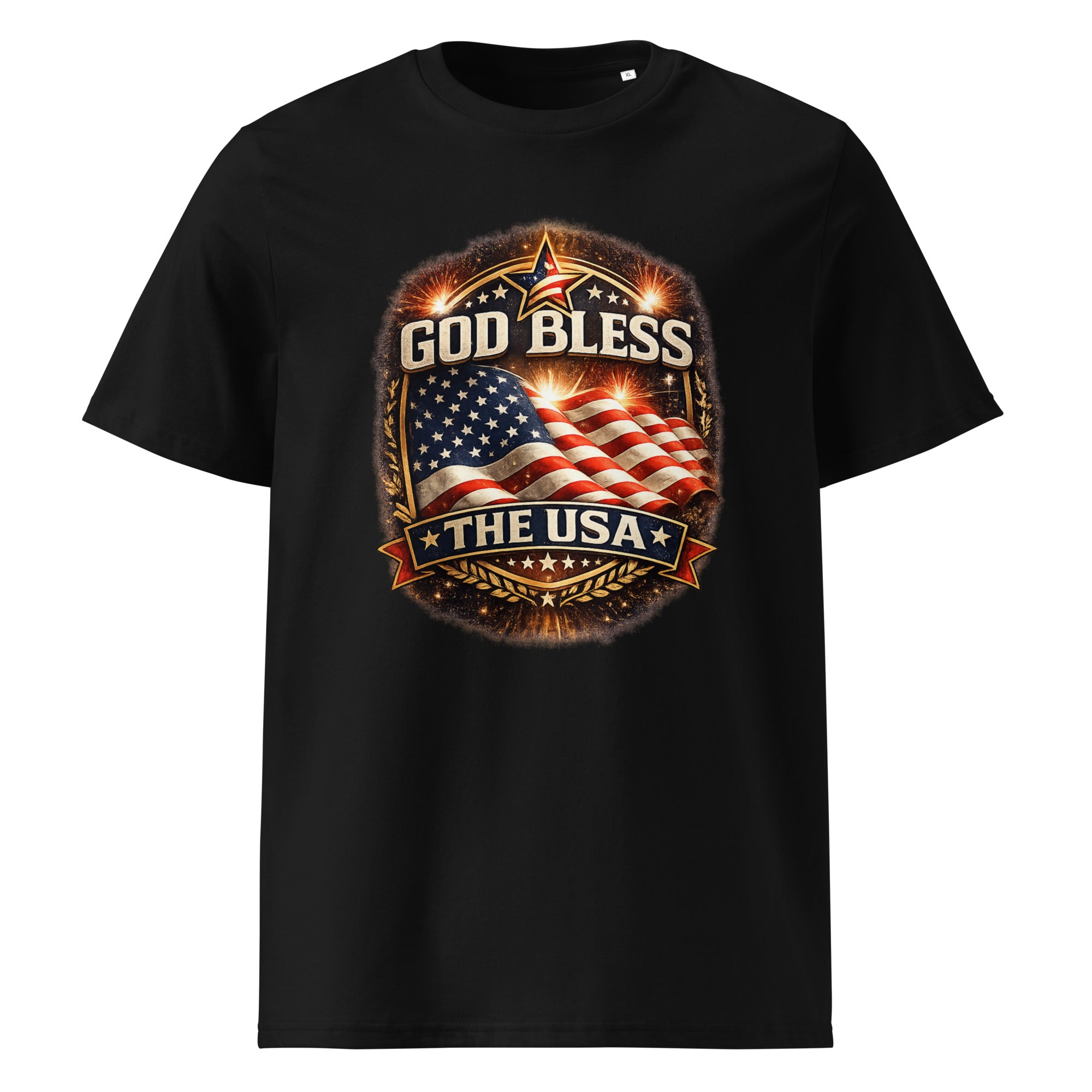
A 5.3 oz organic cotton, like the God Bless the USA Unisex Organic Cotton T-Shirt, feels like a different garment entirely. The double-needle topstitching on sleeves and bottom hems and the 1 × 1 rib collar are construction details listed for this shirt.
Neither is "better." They suit different uses. Pick the weight that matches how often you plan to wear it.
The Best Fabric for T-Shirts That Last Through Wash Cycles
Cotton is breathable, takes print well, and softens over time. Ring-spun cotton resists pilling better than standard open-end cotton. Polyester adds strength, wrinkle resistance, and shape and color retention.
The durability question is really about what you ask the shirt to do: a shirt worn once a month for a holiday event has different demands than one in weekly rotation.
Cotton vs. Cotton-Polyester Blend: A Side-by-Side Look
| Fabric type | Breathability | Shape retention | Shrinkage risk | Print hold | Best for |
|---|---|---|---|---|---|
| 100% ring-spun cotton | High | Moderate | Higher unless pre-shrunk | Strong | Daily wear, softness |
| Cotton-polyester blend | Moderate | High | Low | Strong | Frequent washing |
| Tri-blend (cotton, poly, rayon) | High | Moderate | Low if pre-shrunk | Strong on light ink | Vintage look, warm weather |
| 100% polyester | Lower | Very high | None | Excellent | Performance wear |
A blend is the safer bet if you wash often and hate ironing. All-cotton wins on comfort and breathability. Tri-blend sits between them and gives that worn-in look many people prefer.
Inspect Stitching, Seams, and Shape Retention Before You Buy
Stitching is a useful place to look when judging a shirt.
Collar construction matters just as much. A 1×1 rib collar with self-fabric neck tape resists stretching and curling. A flimsy collar that rolls at the edge will look tired long before the body of the shirt does.
Side-seamed construction and pre-shrunk fabric are features listed on some of our shirts. A shirt with no stated pre-shrink treatment may change size after washing.
Judge Print Durability by the Decoration Method
Print durability depends in part on how the ink or design is applied. Screen printing and direct-to-garment are common methods, each with different trade-offs in feel and detail.
Here is how we would rank the methods for a patriotic shirt you plan to wear for years:
- Screen printing: best all-around durability, especially on solid colors
- Direct-to-garment: great detail, watch for fading on dark backgrounds
- Heat transfer vinyl: fine for occasional wear, weakest over time
- Embroidery: excellent longevity, but less common on casual tees
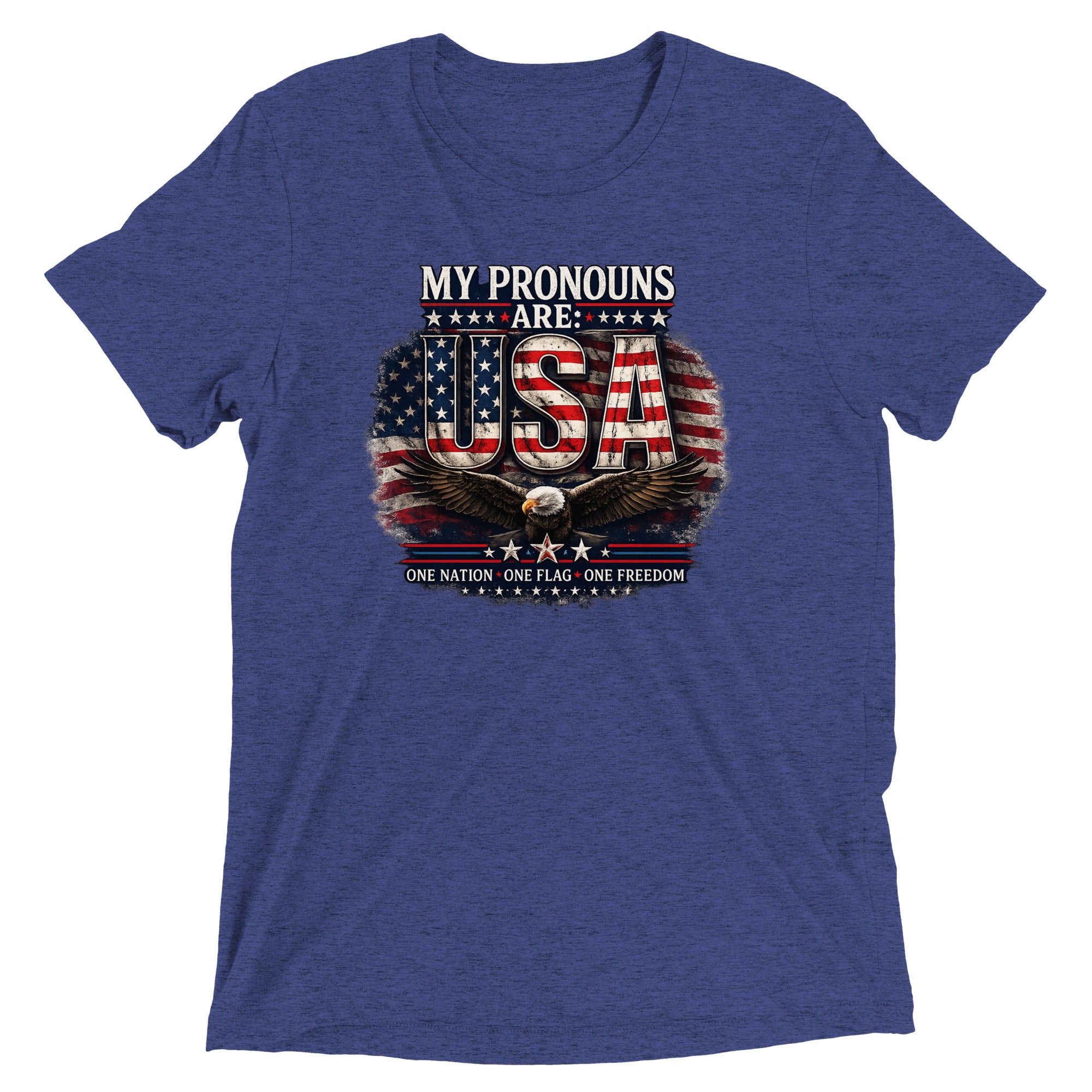
A weathered or vintage print is a design choice, not a defect. Just be sure the "faded" look is intentional and not the start of real cracking. If you want to check a specific shirt's material details before buying, the My Pronouns Are USA Unisex Tri-Blend T-Shirt lists its fabric composition and construction.
Are Patriotic T-Shirts Made in USA More Durable?
Not automatically, and the honest answer is more useful than a patriotic one. Country of origin tells you where a garment was cut and sewn, not the yarn size, stitch density, pre-shrink treatment, or how the print was cured.
Country of origin tells you where a garment was cut and sewn. Fabric weight, fiber content, and construction are the details to confirm from a product listing.
Here is how to separate a genuinely durable shirt from a label claim, regardless of origin:
- Fabric weight is stated in oz/yd². A domestic shirt that lists 5.3 oz organic cotton is giving you a verifiable number. A domestic shirt that says only "premium heavyweight cotton" is not.
- Fiber content is named, not implied. "100% ring-spun cotton" or "50/50 cotton-poly" tells you how the shirt will shrink, pill, and hold color. "Cotton blend" tells you nothing.
- Construction details are visible. Double-needle hems, side seams, shoulder-to-shoulder taping, and a ribbed collar with neck tape are all inspectable in a listing photo. If the photos do not show them, ask.
- Pre-shrink treatment is disclosed. This is the single most common omission on patriotic tees, and it is the difference between a shirt that fits after five washes and one that does not.
- Decoration method is named. Screen print, direct-to-garment, heat transfer, and embroidery have very different lifespans, and a listing that will not name the method is usually hiding a heat transfer.
Watch out: a "Made in USA" badge on a product page is marketing copy until it is paired with a spec sheet. Treat the badge as a starting point for verification, not as proof of durability.
If domestic production matters to you beyond longevity, labor standards, shipping distance, or preference, that is a fair priority worth paying for.
How to Wash Graphic T-Shirts So Prints and Color Last
Most patriotic shirts do not wear out from being worn, they wear out from being washed. Heat, agitation, and the wrong detergent chemistry break down ink, shrink cotton, and pill the knit long before the fabric gives way. The goal is to remove soil while minimizing those three stressors, and the routine is short enough to actually follow.
What each step actually does
- Turn the shirt inside out before washing. This puts the print against itself rather than other garments and the drum, reducing the abrasion that cracks ink and dulls color, and protects the outside face from pilling.
- Use cold water and a gentle cycle. Cold water and a gentle cycle are commonly recommended to reduce shrinkage and wear on prints and collars.
- Skip fabric softener. Softeners leave a waxy residue that coats fibers, dulls print edges, and reduces cotton's absorbency over time. A stiff shirt is usually mineral buildup or heat damage, not a softener deficiency.
- Tumble dry on low or hang to dry. Heat can crack screen-print ink and heat-transfer vinyl, so low heat or line drying is a gentler option.
- Avoid ironing directly over the graphic. If you must iron, turn the shirt inside out or use a pressing cloth. Direct heat on a print is the fastest way to gloss or melt it.
Watch out: high heat can crack screen-printed ink.
Washing by decoration method
The right routine depends on how the graphic was applied. Screen-printed shirts tolerate repeated washing but are vulnerable to heat and abrasion against zippers and buttons. Direct-to-garment prints handle fine detail but fade faster on dark shirts, so wash them inside out and cold every time. Heat-transfer vinyl is the most fragile: it sits on top of the fabric, peels at the edges first, and high heat accelerates that. Embroidery is the most forgiving and mostly needs protection from snags rather than heat.
Drying and storage for a longer lifespan
Line drying in shade preserves print and color better than any dryer setting, and it costs nothing. If you use a dryer, choose the lowest heat and remove the shirt while still slightly damp, then hang it to finish. Fold rather than hang knit tees, hangers stretch shoulders and collars over time. Keep shirts out of direct sunlight for long periods, since UV fades dye and ink, and store them dry; damp storage is how mildew spots start.
How long a well-cared-for shirt should last
A well-constructed, properly washed graphic tee can stay presentable through regular wear. Control heat, agitation, and chemistry, and the shirt's construction, weight, seams, and print method, determines how long it lasts.
Use a Five-Point Checklist Before You Check Out
Run this checklist before you buy any patriotic shirt. It takes two minutes and saves you from a drawer full of shirts that pill, twist, or fade.
- Fabric weight is listed and is 4 oz/yd² or higher for regular wear
- Fiber content is stated, with pre-shrunk noted if cotton
- Side seams and double-needle hems are visible in photos
- Collar has ribbing and neck tape
- Decoration method is named, and the print looks intentional
If a listing fails two or more of these, move on. If it passes most, you are looking at a shirt built to last. When you are ready to compare sources, our guide to 9 Places to Buy Quality Patriotic Clothing applies this same checklist across retailers.
Shop the It's Real USA Collection With Confidence
Durable patriotic shirts are not a mystery. Check the weight, read the fiber content, look at the seams, and know how the print was applied. That is the whole game.
At It's Real USA, we built our collection around those exact standards. If you are planning around a specific event, our Patriotic Clothing for 4th of July: 2026 Style Guide pairs the durability criteria with seasonal style picks.
The real test of a patriotic shirt is not how it looks on day one, but how it looks after a season of wear. Choose fabric you can verify, construction you can see, and a seller who tells you what you are buying.
Get started with It's Real USA and wear your values proudly, season after season.
Frequently Asked Questions
What is the most durable shirt material for patriotic tees?
There is no single winner, but two options stand out. A 100% organic ring-spun cotton at 5.3 oz/yd² (180 g/m²) is a heavier-weight option. A 50% polyester, 25% cotton, 25% rayon tri-blend at 3.4 oz/yd² (115.3 g/m²) is lighter and pre-shrunk, and can be slightly sheer in light colors. Match the fabric to how often you plan to wear the shirt.
How can you tell if a patriotic shirt is well made before ordering?
Check four things in the product listing. Look for side-seamed construction instead of tubular cuts, shoulder-to-shoulder taping or self-fabric neck tape, double-needle topstitching on hems, and pre-shrunk fabric. A published size chart with both inches and centimeters is another sign the seller expects you to compare measurements. If the listing skips fabric weight and fiber content, treat that as a warning sign.
How should you wash graphic T-shirts to prevent fading and cracking?
Turn the shirt inside out, wash cold on a gentle cycle, and skip fabric softener. Tumble dry low or hang dry, and avoid ironing directly over the print. High heat is what breaks down screen-printed ink and causes cracks along fold lines.
Are patriotic T-shirts made in USA more durable?
Country of origin alone does not guarantee durability. What matters is the spec sheet: fabric weight, fiber blend, stitching, and pre-shrinking. Ask where the blank is sourced and read the fabric details. It's Real USA lists blank sourcing from Guatemala, Nicaragua, Honduras, Bangladesh, or the US depending on the style.
